Every Inch Counts: How to Choose the Right Seat on Your India-US Flight
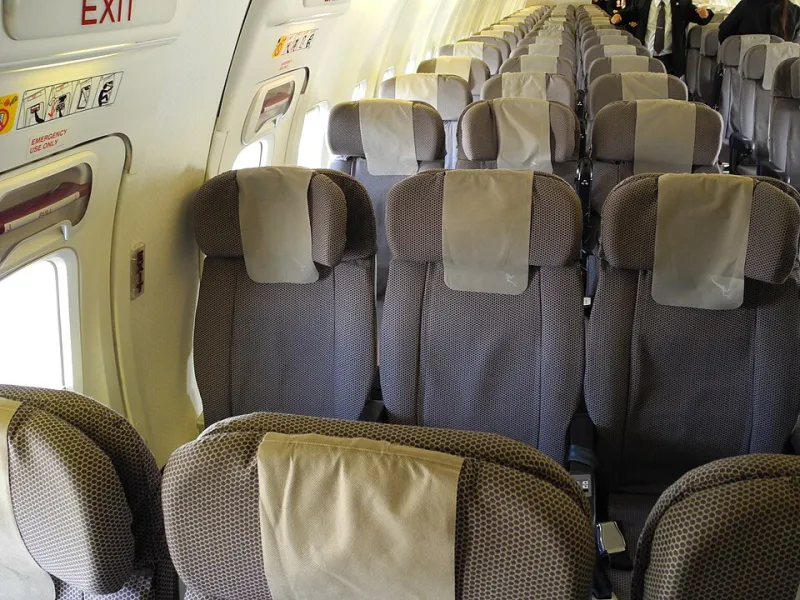
Photo: Douglas P. Perkins, CC BY-SA 3.0, via Wikimedia Commons
Most travelers book their India-US tickets weeks—or even months—in advance, carefully comparing fares, layover durations, and airline loyalty programs. Yet a surprising number of those same travelers give almost no thought to where, precisely, they will spend the next 14 to 17 hours of their lives. On a transatlantic or transpacific journey of this magnitude, seat selection is not an afterthought. It is a discipline.
Whether you are flying out of John F. Kennedy, Chicago O'Hare, San Francisco International, or any of the other major US gateways that connect to Mumbai, Delhi, Bengaluru, or Chennai, the principles of smart seat selection remain consistent. Here is how to approach the decision with the seriousness it deserves.
Understanding the Aircraft First
Before you can make an informed seat choice, you need to know what you are flying. The India-US corridor is served by several wide-body aircraft, most commonly the Boeing 777, the Boeing 787 Dreamliner, and the Airbus A350. Each of these has a distinct cabin layout, and the differences matter enormously.
The Boeing 777, for instance, often features a 3-4-3 configuration in economy class—meaning rows of ten seats divided into three sections. The middle section of four seats is widely considered the least desirable for solo travelers, as it places you between strangers with limited access to either aisle. The 787 Dreamliner, by contrast, is frequently configured in a 3-3-3 layout, which is somewhat more forgiving. The Airbus A350 similarly tends toward a 3-3-3 arrangement in economy.
Before selecting your seat, look up the specific aircraft operating your flight using a seat review resource such as SeatGuru or the airline's own seat map. Knowing the layout in advance eliminates guesswork entirely.
The Window Versus Aisle Debate, Settled
This is the question every long-haul traveler eventually confronts, and the honest answer is that it depends on your personal physiology and travel style.
Window seats offer one undeniable advantage on overnight flights: the ability to lean against the fuselage and sleep without being disturbed by fellow passengers needing to pass. They also give you control over the window shade, which is more relevant than it sounds when you are trying to regulate your body clock. The primary drawback is that accessing the aisle requires disturbing your seatmates—a real inconvenience on a 16-hour journey, particularly if you need to stretch or visit the lavatory frequently.
Aisle seats grant freedom of movement and are strongly preferred by passengers who are tall, prone to restlessness, or managing medical conditions that require periodic movement. The trade-off is exposure: aisle seats receive more foot traffic from other passengers and crew, and you may be nudged or bumped during the night.
For most travelers on India-US routes, the aisle seat earns a slight edge purely on the basis of circulation and comfort over such an extended duration. However, if you are a sound sleeper who rarely needs to move, a window seat in a quieter section of the cabin may serve you better.
Seats to Actively Avoid
Not all seats are created equal, and the seat map can be deceptive if you do not know what to look for.
-
Last rows of the cabin: These seats are frequently positioned directly in front of lavatories or galley areas. The combination of noise, foot traffic, and odor makes them among the least restful options on the aircraft. They also tend not to recline fully, as they abut the rear bulkhead.
-
Seats adjacent to emergency exits (non-bulkhead): While exit row seats offer additional legroom, some of them come with fixed armrests that do not raise, narrowing the usable width of the seat. Always verify the specific exit row configuration before selecting.
-
Middle seats in the center block of a 777: As noted earlier, the 3-4-3 configuration places two middle seats in the center section that are surrounded on both sides. Unless you are traveling with companions who occupy the adjacent seats, these positions are best avoided.
-
Seats near galley bulkheads mid-cabin: Galleys generate consistent noise from equipment and crew activity throughout the flight, particularly during meal service and in the hours before landing.
The Case for Bulkhead and Exit Row Seats
Bulkhead seats—those positioned at the front of a cabin section, facing a wall rather than another seat—offer genuine advantages for certain travelers. The additional floor space is ideal for passengers with longer legs or those who simply need room to shift position. Families traveling with infants often favor bulkhead rows because they accommodate bassinet attachments on many aircraft.
The limitation of bulkhead seats is the absence of under-seat storage. All carry-on items must be stowed in overhead bins during takeoff and landing, which can be inconvenient on a journey where you want frequent access to a book, headphones, or medication.
Exit row seats, meanwhile, are a strong choice for tall passengers willing to accept the responsibility of assisting in an emergency evacuation. Be aware that passengers seated in exit rows must meet certain criteria—typically being able-bodied adults who can follow crew instructions in English—and children are not permitted in these rows.
Seat Selection and Jet Lag: The Science
The connection between seat position and jet lag is more meaningful than most travelers realize. Research on circadian rhythm disruption consistently points to light exposure as a primary driver of how quickly the body adapts to a new time zone.
On eastbound flights from the US to India, the cabin typically transitions from darkness to bright morning light relatively quickly. Passengers seated on the left side of the aircraft (which faces south on eastbound routes) may receive more direct sunlight through windows during the final hours of the flight. If your goal is to arrive in India and immediately adapt to local time, controlled light exposure can assist that process. Conversely, if you need to sleep through the final approach, a window seat where you can fully close the shade gives you that option.
Additionally, seats positioned toward the front of the economy cabin tend to disembark faster, which means less time standing in a cramped aisle after an already exhausting flight. The cumulative effect of a faster exit, quicker immigration processing, and earlier access to fresh air and natural light can meaningfully ease the transition.
Premium Economy: Is the Upgrade Worth It?
On many aircraft operating India-US routes, premium economy occupies a compelling middle ground between the constraints of standard economy and the considerable cost of business class. Premium economy typically offers seats that are three to four inches wider, with substantially more recline and greater seat pitch—often in the range of 38 to 40 inches compared to the 31 to 33 inches common in economy.
For a journey of 15 hours or more, that additional space translates into a meaningfully different physical experience. Premium economy passengers also tend to receive enhanced meal service and dedicated overhead bin space. Whether the price differential is justified depends on how your body responds to prolonged sitting and how much you value arriving in reasonable condition.
For travelers making the India-US journey multiple times per year—as many professionals and families based in the United States do—the investment in premium economy on at least one leg of the round trip is often considered worthwhile.
How to Lock In the Best Seat
The most practical advice is also the simplest: select your seat at the time of booking, not at check-in. Desirable seats fill quickly, and the best positions—front aisle seats in economy, premium economy bulkheads, exit rows with genuine legroom—are often claimed within hours of a flight opening for booking.
If your preferred seat is not available at booking, revisit the seat map periodically in the weeks before departure. Passengers upgrade, itineraries change, and seats that were previously occupied often become available. Many experienced travelers on this route set reminders to check seat availability 48 to 72 hours before the flight, when a final wave of changes typically occurs.
The India-US journey is one of the longest regularly traveled routes in commercial aviation. Approaching your seat selection with the same care you apply to your fare search is not excessive—it is simply good preparation.