The Borderless Professional: How to Build a Seamless Work Life Across the India-US Flight Path

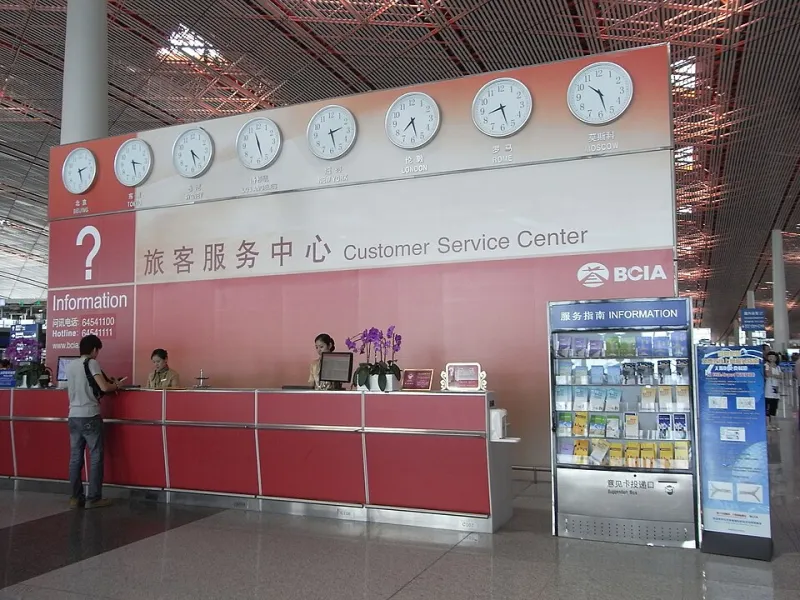
Photo: Shixart1985, CC BY 2.0, via Wikimedia Commons
Not long ago, the India-US traveler fit into one of a handful of recognizable categories: the student heading to an American university, the IT professional on an H-1B visa, the family making its annual pilgrimage home, or the tourist exploring a new culture. Today, a fifth profile has emerged and is growing rapidly — the location-independent professional who maintains active work commitments on both sides of the Pacific and treats the flight path itself as an extension of their working environment.
This traveler is not on vacation. They are not relocating. They are conducting business from airport lounges in Newark and Bengaluru alike, attending video calls from hotel rooms in Mumbai and co-working spaces in Chicago, and managing deadlines measured in both Eastern Standard Time and Indian Standard Time simultaneously. The aviation industry is only beginning to adapt to their needs, and the individuals who navigate this lifestyle most successfully are those who approach it with deliberate planning rather than improvisation.
Understanding the Visa Landscape Before You Depart
For Indian nationals holding US work visas, the question of remote work is legally nuanced and frequently misunderstood. A person on an H-1B visa, for instance, is authorized to work for a specific employer at a specific location. Working remotely from India for a US employer while physically present in India does not inherently violate US immigration law — because the individual is not in the US — but it may trigger tax obligations, employment contract complications, or issues upon re-entry if the extended absence raises questions about intent to abandon US residency.
US citizens and green card holders working for Indian companies or clients face a different set of considerations. Extended stays in India can create tax residency implications under Indian law, particularly if the duration exceeds 182 days in a financial year. The Foreign Tax Credit provisions of the US tax code exist precisely to address such situations, but they require careful documentation and, ideally, the guidance of a tax professional familiar with both jurisdictions.
For those exploring India's evolving digital nomad ecosystem, it is worth noting that India does not yet offer a dedicated digital nomad visa — unlike countries such as Portugal or the UAE. Most remote workers from the US enter India on a tourist visa (e-Visa) and remain compliant by not engaging in activities that constitute formal employment within India. The legal boundaries here are not always clearly defined, and consulting an immigration attorney before establishing an extended remote work arrangement is strongly advisable.
Choosing Your Route With Work in Mind
Not all flight paths between India and the US are created equal for the working traveler. The choice of routing — and specifically the layover city — can meaningfully affect your productivity during and immediately after the journey.
Several considerations are worth weighing:
Stopover cities with strong connectivity infrastructure make it possible to work productively during a layover. Dubai, Doha, London Heathrow, and Singapore consistently rank among the best-equipped international hubs for business travelers. These airports offer dedicated business lounges with reliable high-speed internet, quiet workspaces, and meeting rooms available for booking. A six-hour layover in Dubai can be transformed into a productive half-workday if approached with the right tools and expectations.
Time zone alignment is another underappreciated routing variable. India Standard Time sits 9.5 to 10.5 hours ahead of US Eastern time (depending on daylight saving). A routing through Europe tends to arrive in India during morning hours, allowing for an afternoon of work upon arrival. A routing through East Asia may deliver you to India in the late evening, making the next morning your first productive window. Neither is inherently superior — the right choice depends on your meeting schedule and deadlines.
Flight duration and overnight vs. daytime travel affect cognitive readiness upon arrival. Many seasoned India-US professionals prefer overnight flights precisely because they align sleep with the flight itself, arriving closer to functional alertness. Daytime flights may offer more in-flight working hours but can extend fatigue into the first full workday at the destination.
Optimizing Productivity in the Air
Modern long-haul aircraft have made meaningful strides in accommodating the working traveler, though the quality of the in-flight work environment varies considerably by airline and cabin class.
Several airlines serving the India-US route now offer in-flight Wi-Fi, but connection speeds and reliability remain inconsistent at altitude. Before relying on in-flight internet for anything time-sensitive, download all necessary files, presentations, and reference materials to local storage. Cloud-based work tools should be treated as supplementary rather than primary during the flight.
The most productive in-flight working setups share common characteristics:
- Noise-canceling headphones are non-negotiable on a 16-to-18-hour journey. The ambient noise of a wide-body aircraft cabin is cognitively fatiguing in ways that are not always consciously noticed until productivity drops.
- A compact wireless keyboard paired with a tablet can transform a cramped economy seat into a functional writing or coding environment without requiring the awkward angle of a laptop on a tray table.
- Strategic task selection matters enormously. Reserve high-concentration tasks — writing, coding, financial analysis — for the early hours of the flight when alertness is highest. Save lower-intensity tasks — email triage, reading, video review — for the latter portion, when fatigue begins to accumulate.
Managing the Timezone Divide as a Professional Asset
The 9.5-hour offset between India and the US East Coast is often framed as an obstacle. For the skilled remote professional, it can be restructured as a competitive advantage.
Teams that span both time zones can, with thoughtful scheduling, achieve nearly 24-hour operational coverage. A US-based professional who establishes early morning overlap hours with India-based colleagues — say, 7:00 to 9:00 AM Eastern, which corresponds to late afternoon in India — can handle real-time collaboration while preserving the majority of the US workday for domestic responsibilities.
Upon arrival at your destination, resist the impulse to immediately mirror the local schedule. A gradual shift over 48 to 72 hours, combined with strategic use of natural light exposure, allows the body clock to adjust without the acute disorientation that derails the first workweek. Several apps and wearables now offer personalized light exposure and sleep scheduling recommendations based on your specific travel itinerary.
The Infrastructure You Need Before You Land
A successful remote work arrangement across the India-US corridor requires more than a laptop and good intentions. Before departure, confirm the following:
- SIM card or international data plan: Indian SIM cards from providers such as Airtel or Jio are inexpensive and widely available at major airports, offering strong 4G and 5G coverage in urban areas. Arranging this before leaving the airport saves hours of connectivity limbo.
- VPN service: Certain business applications and platforms may have regional access restrictions. A reliable VPN ensures continuity of access across both countries.
- Time zone management tools: Apps such as World Time Buddy or the native world clock feature on most smartphones allow you to schedule meetings across multiple time zones without arithmetic errors.
- Backup power: Power outages remain more common in parts of India than in the US. A high-capacity portable battery and a universal adapter are practical essentials rather than luxuries.
The India-US flight path is no longer merely a conduit between two lives. For a growing number of professionals, it is a thread that stitches those lives into a single coherent whole. With the right preparation, the journey itself — and the weeks on either end of it — can be as professionally productive as any day spent in a fixed office.