The Middle Cabin Comes of Age: Why Premium Economy Is Winning Over India-US Travelers
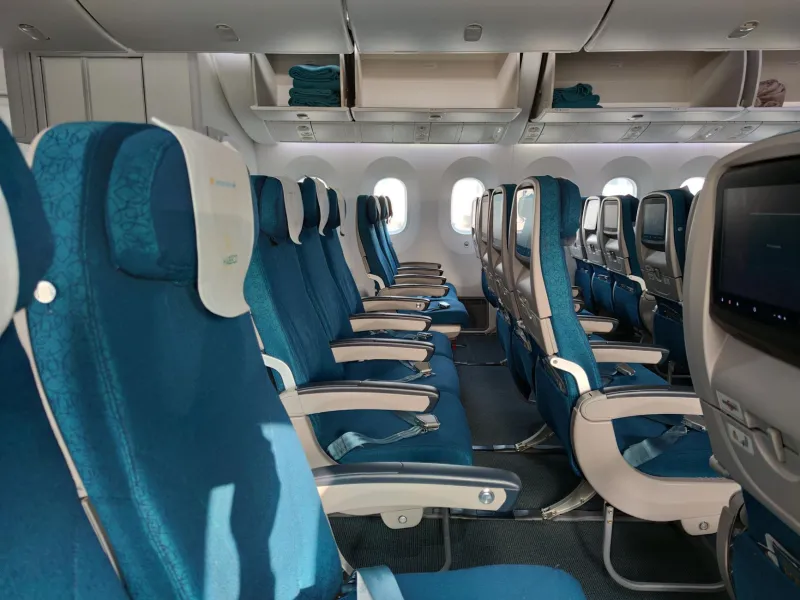
For years, the India-US route presented travelers with a blunt choice: endure fourteen hours in economy or pay a small fortune for business class. That binary is dissolving. Premium economy, once an afterthought tacked onto widebody aircraft, has matured into a genuinely differentiated product — and on ultra-long-haul sectors to Delhi and Mumbai, it may be the most rational purchase in the cabin map.
What You Actually Get
The pitch varies by carrier, but the fundamentals are consistent. On Air India's 777s and A350s, premium economy delivers roughly a 38-inch pitch and eight inches of additional recline compared to economy, along with a dedicated meal service and priority boarding. United's Premium Plus on its Newark-Delhi nonstop offers similar geometry, while the 787 Dreamliners operated on West Coast routes add larger screens and a separate cabin section that feels meaningfully quieter.
Seat width is the metric travelers underestimate. Economy seats on most India-US aircraft hover around 17 inches; premium economy typically stretches to 18.5 or 19. On a flight from San Francisco to Bengaluru — among the longest in the world — that difference is not a luxury. It is the margin between arriving functional and arriving wrecked.
The Price Question
Historically, the premium economy surcharge on this corridor has run between $350 and $700 each way over the lowest economy fare, though the spread widens dramatically around December and June, when the diaspora travel surge inflates everything. A useful rule of thumb: if the upgrade costs less than 40 percent of your economy fare, the value proposition is strong. Above 60 percent, you are paying scarcity pricing, not product pricing.
Consider a typical fall booking from Chicago to Hyderabad. Economy in the low $900s; premium economy around $1,400. For an overnight eastbound segment departing in the evening and landing past midnight India time, the ability to actually recline and sleep converts a lost day into a usable one. For a family of four, however, that $2,000 difference may be better spent on a direct routing that eliminates a connection.
When the Upgrade Earns Its Keep
Three scenarios tilt decisively toward premium economy. First, red-eye and overnight segments, where sleep quality is the entire game. Second, travelers over sixty, for whom the deeper recline and wider cushion genuinely reduce the stiffness and circulation strain of long-haul flying — a point orthopedic specialists have made repeatedly about ultra-long routes. Third, work trips, where landing in Bengaluru or Mumbai able to function in a morning meeting has measurable professional value.
When to Keep Your Money
Westbound daytime flights are the exception. A noon departure from JFK arriving the next morning in Delhi is a waking flight for most passengers; the extra recline buys little. Similarly, if you hold elite status that already grants you economy plus seating, or if you are tall enough to value an exit row over a wider seat, the premium cabin may duplicate benefits you already have. And on older aircraft without updated cabins, the product can feel like economy with a better pillow — check the specific aircraft and configuration before paying.
The Bottom Line
Premium economy on the India-US corridor has crossed from marketing category to legitimate sweet spot. Book it deliberately — for overnight sectors, older travelers, and working arrivals — and skip it reflexively on daylight flights. The middle cabin, at last, has earned its place on the boarding pass.