Special Meals, Real Risk: How to Secure the Right Tray on India-Bound Flights
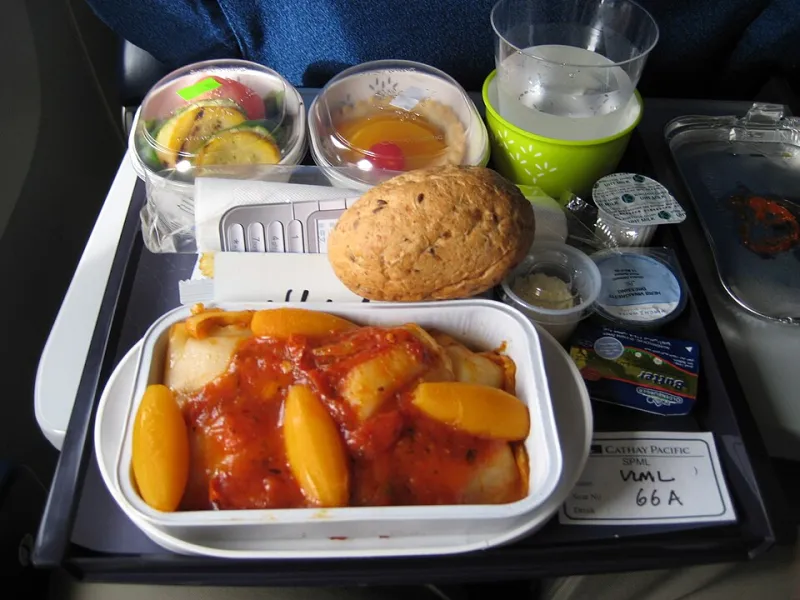
Photo: User:JunK, Public domain, via Wikimedia Commons
Special meals are one of the few airline services that still feel personal. They are also one of the easiest to lose between booking, ticketing, and boarding. A vegetarian meal requested through a travel agency may never reach the operating carrier. A Jain meal may be loaded on the first leg and missing on the connection. A diabetic traveler may find that the meal code was recorded but the catering truck did not receive it. The strategies below are ranked from strongest to weakest, because a special meal is a reservation that needs confirmation at every handoff.
Why Special Meals Fail
Airlines load meals by code, not by narrative. The reservation must carry the correct special meal code, and the operating carrier must transmit it to catering before the cutoff. Codeshare flights complicate this because the marketing carrier may take the request while the operating carrier loads the food. Equipment swaps and delays can break the chain. A meal that was loaded for a 9 p.m. departure may not move to the replacement aircraft. The traveler who confirms once at booking has confirmed almost nothing.
Know the Codes Before Calling
The common codes are worth memorizing. AVML is an Asian vegetarian meal. VJML is a Jain meal. VGML is vegan. DBML is diabetic. GFML is gluten-free. HNML is Hindu. KSML is kosher. MOML is Muslim. Not every airline offers every code on every route. Jain meals are especially uneven; some carriers offer VJML only on selected India departures. When a code is unavailable, ask the airline to record a written note, but do not assume the note will become a meal.
Rank 1: Book Direct and Confirm in the PNR
The strongest strategy is to book with the operating carrier and request the meal at the same time. Check that the confirmation shows the meal code, not just a chat message. Then reconfirm at 72 hours, 48 hours, and 24 hours before departure. Use the airline app if it displays meal status. Save a screenshot. A confirmation number without a meal code is a hope, not a record.
Rank 2: Call the Operating Carrier, Not the Codeshare
On a codeshare, the operating carrier controls catering. Call that airline even if the ticket was sold by another carrier. Ask the agent to read back the special meal code in the passenger name record. Get the agent's name and a reference number. If the operating carrier says the request did not transfer, ask the marketing carrier to resend it. Do not rely on a travel agency portal alone. When booking through Chitra Nair Airways, travelers should ask for the meal code to appear on the itinerary confirmation.
Rank 3: Build a Connection Buffer
The meal is most vulnerable on the second leg of a connection. A tight layover gives the operating carrier less time to reconcile the record. Choose a longer connection when dietary needs are medical or religious. On the first flight, ask the cabin crew to check whether the second meal is loaded. They may not have the answer, but the question creates a paper trail. If the connection is changed, re-request the meal immediately with the new operating carrier.
Rank 4: Carry a Backup That Clears Security
A backup meal should survive security and customs. Pack commercially sealed snacks, nuts, dried fruit, and a refillable water bottle emptied before the checkpoint. Solid food is generally allowed through US security; liquids remain subject to the 3-1-1 rule. For diabetic travelers, carry glucose tablets and a doctor's note if insulin or supplies are needed. For Jain travelers, confirm whether the backup food avoids root vegetables if that is part of the practice. For international arrivals, declare food and check customs rules before carrying fresh produce.
Rank 5: Ask at the Gate and Onboard
Gate agents can sometimes add a meal request before the final manifest closes. Board early and speak to the cabin crew. If the special meal did not load, ask whether an alternative vegetarian or diabetic-friendly option is available. Do not demand a meal that is not onboard; ask for the safest available substitute. If the issue is medical, explain it calmly and ask for the crew's help. A spare meal is not guaranteed, but an early conversation is better than a discovery at tray service.
The Backup Plan That Survives Delays
Eat a real meal before the airport. Pack two snacks, not one. Identify a restaurant in the terminal before boarding. If the flight is delayed or the aircraft changes, re-request the meal with the operating carrier. If a connection is missed, treat the meal as lost and buy food at the new gate. For long delays, do not wait for the airline to solve dinner. The special meal is a courtesy, and courtesy can run out.
The Bottom Line
A special meal is not a guarantee. It is a request that must travel with the ticket, reach the caterer, and survive the aircraft change. Book direct when possible, confirm the code in the record, call the operating carrier, and carry a backup. The traveler who does all four is rarely surprised at 35,000 feet.