Wheelchairs, Aisle Seats, and Pill Organizers: The Adult Child's Blueprint for a Survivable Flight Home for Mom and Dad
Photo: Unknown authorUnknown author or not provided, Public domain, via Wikimedia Commons
The first time Ramesh booked a flight for his 74-year-old mother from San Francisco to Chennai, he thought the hardest part was over once he got the confirmation email. It wasn't. Her wheelchair request never made it onto the manifest, her connecting layover in Doha was a brisk 65 minutes, and she spent forty minutes walking the length of an unfamiliar concourse with a cane. The trip ended well, but only because a stranger flagged a gate agent.
Stories like this are common enough that airline special-services teams have a phrase for them: the forgotten PNR addendum. We spoke with customer-service veterans across three carriers serving the India-US market to understand what actually gets arranged when you book for elderly parents — and what routinely falls through the cracks.
The Special-Service Request Nobody Double-Checks
Every major carrier flying the India-US route — Air India, United, Emirates, Qatar Airways, Lufthansa — supports Special Service Requests, or SSRs, in the passenger record. Wheelchair assistance comes in three standardized codes: WCHR (can walk short distances, needs help to the gate), WCHS (cannot manage stairs), and WCHC (needs full assistance to the seat). Most adult children request "wheelchair" generically. The codes matter, because a WCHR passenger will be pushed to the aircraft door and then left to walk the aisle alone.
Here is the part the special-services teams told us almost nobody knows: SSRs do not always survive a schedule change. If your parents' flight is re-timed or rebooked on a partner carrier, the request can drop off entirely. Call the airline 72 hours before departure and confirm the assistance code is still attached. Then call again on the morning of the flight. Yes, twice.
The 72-Hour and Day-Of Checklist
Work through this list in the week before departure:
- Reconfirm all SSRs by phone, including wheelchair code, meal requests, and any oxygen or medical clearance documentation.
- Print the itinerary in large font, including terminal maps for every connection, and tuck a copy into their carry-on.
- Write the arrival pickup contact on a card — name, US phone number, and relationship — in both English and, if useful, the regional language.
- Pack medications in original pharmacy bottles in the carry-on, never the checked bag, with a printed schedule showing when each dose falls in both origin and destination time zones.
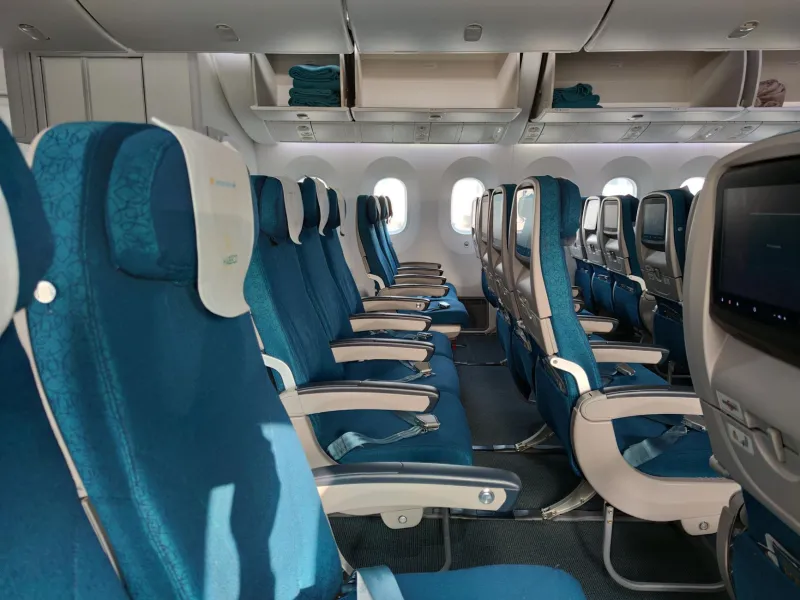
- Choose aisle seats within one row of a lavatory, ideally in the front cabin where service is quieter and deplaning is faster.
- Download the airline app on your own phone using their booking reference, so you can monitor gate changes in real time from your side.
- Arrive at the airport three hours early, and if a family member can accompany them to the gate, request a gate pass at the check-in counter — most US carriers still issue them for passengers needing assistance.
Layovers: Shorter Is Not Kinder
The instinct is to minimize total travel time, which usually means booking the tightest connection available. For an elderly traveler, that math is backwards. A 90-minute connection at a foreign hub means a stressful sprint; a three-and-a-half-hour layover means a sit-down meal and an unhurried wheelchair transfer between terminals.
Aim for connections of at least three hours on the outbound and, critically, on the return through US ports of entry, where immigration and customs lines can be punishing. If the budget allows, consider an overnight connection so your parents can sleep horizontally in an airport hotel rather than upright in a lounge chair.
The Time-Zone Medication Puzzle
A blood-pressure medication taken at 8 a.m. in New Jersey does not translate neatly to an 8 a.m. dose in Bengaluru. Pharmacists generally recommend shifting long-haul dosing gradually — 30 to 60 minutes per day in the days before departure — rather than making an abrupt jump. For the flight itself, instruct your parents to follow the departure-city clock until they land, then switch. Put the schedule in writing. Verbal instructions delivered at the airport door have a way of evaporating by row 40.
What Falls Through the Cracks
The special-services teams were candid about three recurring gaps. First, meal requests for diabetic or low-sodium diets are usually honored but occasionally missed on codeshare segments — pack backup snacks. Second, onboard wheelchairs (the narrow aisle chairs used to reach a window seat) must be requested in advance; flight crews cannot conjure one mid-Atlantic. Third, return-leg assistance at US airports is frequently under-resourced during peak winter travel; build an extra buffer into whoever is picking your parents up at the arrivals curb.
Booking for aging parents is an act of translation — converting your worry into logistics. Do it methodically, confirm everything twice, and the flight home becomes what it should be: uneventful.