The Clock Tax: How Departure Time Windows Quietly Reshape What You Pay on India-US Flights
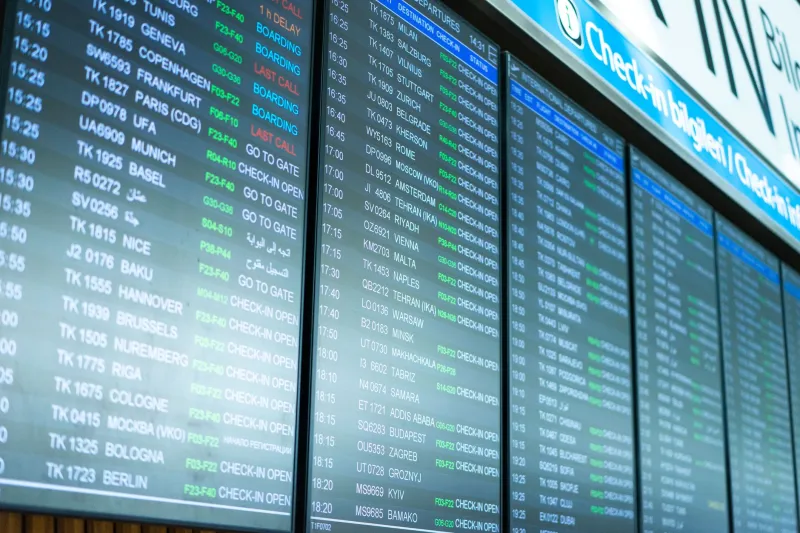
The Minute That Changes Everything
Imagine two flights departing from John F. Kennedy International Airport bound for Mumbai. One leaves at 11:59 PM. The other departs at 12:01 AM. On the surface, they are separated by a mere two minutes. In practice, they may sit in entirely different pricing categories, trigger different tax calculations, and reflect distinct positions within an airline's revenue management architecture.
This is not a hypothetical curiosity. For travelers regularly flying between the United States and India, understanding how departure time windows interact with pricing systems can mean the difference between paying a fair fare and unknowingly absorbing costs that were never inevitable.
How Airlines Categorize Flights by Departure Window
Airlines do not price flights purely on supply and demand, though that is the most visible factor. Beneath that surface layer lies a structured taxonomy of departure windows that carriers use to assign base fares, load revenue targets, and align with interline agreements.
Most major carriers operating the India-US route organize their daily schedule into distinct time bands: early morning (typically 5:00 AM to 8:00 AM), daytime (8:00 AM to 5:00 PM), evening (5:00 PM to 9:00 PM), and overnight or red-eye (9:00 PM to 5:00 AM). Each band carries its own demand profile, and airlines price accordingly.
What many travelers do not appreciate is that the boundaries between these bands are treated as hard lines within airline reservation systems. A flight scheduled at 8:59 PM may be priced as an evening departure with its associated demand premium, while a 9:01 PM departure enters the overnight category, where load factors are historically lower and base fares often softer. This is not a rounding error—it is a deliberate structural feature of how global distribution systems process fare families.
Government Taxes and the Midnight Trigger
Beyond airline-controlled pricing, government-imposed taxes on international air travel introduce another layer of time sensitivity. In the United States, the Federal Excise Tax on international departures is applied uniformly, but the date of departure—not the date of booking—determines which fiscal records and bilateral air service agreement frameworks apply in certain edge cases.
More practically relevant for India-US travelers is the way Indian government taxes are calculated on inbound and outbound segments. India's Goods and Services Tax (GST) on air travel applies to the Indian-origin or Indian-destination segment of a ticket. The rate and its calculation base can shift depending on whether a flight is classified as a domestic connection, an international segment, or a code-share operated under a foreign carrier designation. The departure time, insofar as it determines which carrier leg is technically the "primary" segment in a split itinerary, can influence how these taxes are allocated across your total fare.
For travelers booking itineraries that include a domestic Indian connection—say, flying into Delhi and then connecting onward to Chennai—the departure window of the international segment affects how the domestic GST segment is bundled. Booking a late-night international arrival that connects to an early-morning domestic flight may result in those segments being priced and taxed as a single through-fare under certain conditions, while a midday arrival might force a separate domestic booking with full GST applied independently.
Fuel Surcharges and the Hour-Specific Calculation
Fuel surcharges, officially designated as YQ or YR surcharges in airline fare construction, are not static additions. Carriers adjust them periodically, and the version of a surcharge applied to your ticket is locked in at the moment of ticketing—not at the moment of travel. However, the departure time of your flight can influence which surcharge table is referenced.
Some carriers operating the India-US route apply tiered fuel surcharge structures based on flight duration and the operational cost profile of specific departure slots. An overnight departure from Newark to Mumbai, for instance, may benefit from lower average fuel burn projections built into the airline's cost modeling for that window—projections that are sometimes passed through, partially, to the fare construction. This is not universal across all carriers, but it is documented behavior among several of the major alliance partners serving this corridor.
The Algorithm Layer: Dynamic Pricing and Time-of-Day Signals
Above the tax and surcharge mechanics sits the most dynamic and least transparent layer: algorithmic pricing. Modern airline revenue management systems monitor not only how many seats remain on a given flight but also the behavioral patterns of searchers, including the time of day at which bookings are being made and the departure times being searched most frequently.
There is credible evidence, drawn from fare-monitoring research and traveler communities tracking India-US routes, that flights departing in windows with lower search volume receive softer algorithmic pricing during off-peak search hours. In practical terms, this means that a flight departing at 1:15 AM from Chicago O'Hare may not only carry a lower base fare due to its overnight classification, but may also be priced more favorably during the late-night hours when fewer competing searches are occurring in real time.
The implication for travelers is that the departure time of the flight and the time of day at which you search for that flight interact in ways that compound or offset each other. Searching for an overnight departure during peak midday browsing hours may yield a different price than searching for the same flight at 11:00 PM from your home computer.
A Practical Framework for Timing Your Booking Decision
Given these layered dynamics, travelers flying between the US and India can apply a structured approach to departure time selection:
Step one: Identify the departure window boundaries used by your preferred carrier. Review the airline's schedule across several weeks and note where pricing shifts noticeably between adjacent departure times. This boundary mapping takes roughly thirty minutes using a flexible-date search tool.
Step two: Calculate the all-in fare, not the base fare. Request a fare breakdown that includes taxes, YQ/YR surcharges, and carrier-imposed fees. Compare flights departing within thirty minutes of a window boundary to identify whether crossing that boundary produces a meaningful price difference.
Step three: Account for your connection structure. If your itinerary includes a domestic Indian segment, determine whether an overnight international arrival qualifies for through-fare bundling with your domestic connection. Your travel agent or the airline's fare desk can confirm this for specific routes.
Step four: Search at low-traffic hours. For overnight departure windows, conduct your fare search between 10:00 PM and midnight Eastern Time. This aligns your search behavior with the period when algorithmic pricing tends to be least competitive and most favorable to the buyer.
Step five: Lock in during mid-week. Tuesday and Wednesday remain the most consistently favorable days for fare-locking on India-US routes, as airline revenue management systems typically reprice inventory on Monday evenings following weekend demand surges.
The Discipline of Precision
Flying between India and the United States is a significant financial commitment. The India-US corridor is one of the world's longest and most heavily trafficked international routes, and the cumulative cost of imprecise booking decisions adds up across a lifetime of travel. Understanding that a two-minute difference in departure time can place a flight in an entirely different pricing environment is not a minor detail—it is the kind of structural knowledge that separates the traveler who consistently finds value from the one who consistently overpays.
At Chitra Nair Airways, our purpose is to ensure that the sky bridge between India and America is navigated with clarity. The clock on your departure board is not just telling you when to arrive at the gate. It is also, quietly, telling you what you paid to be there.